When I am preparing to write a play, there are a number of actions I take to put myself in the right headspace. I do copious amounts of research, of course, especially if I am writing about something I was not previously that familiar with.
Which – unless I am writing apiece that is overtly autobiographical – is often.
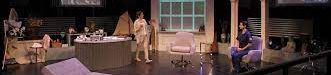
With “Featherbaby,” because the two humans are competitive jigsaw puzzlers, I went deep into jigsaw puzzles. I read everything written about jigsaw tournaments. I searched journalistic texts, the local library and various Facebook groups to learn about the culture, lingo and history of of jigsaw puzzles.
And of course (aided by the pandemic’s having isolated me in a semi-empty house for months) I worked a lot of jigsaw puzzles.
When I wrote “Mary Shelley’s Body” (stay tuned for an announcement about an upcoming production in Northern California), I read “Frankenstein” and most of Shelley’s other books, I read the poetry of Percy Bysshe Shelley and Lord Byron, I read the journals of Mary Shelley and just for good measure, some of the books her parents wrote. I studied “Gray’s Anatomy” for details about the workings of the human body. I watched videos of surgeries and dissection. I listened to recordings of classical music that was popular during Mary’s life, and read newspapers from the time.
So I do all of that.
But this is just the intellectual preparation.
To get myself emotionally ready for writing a new play, I do other things. I try to get in shape, eat well and get good sleep, because writing obsessively is a physical act as much as it is a mental one. I make a mixtape of music that I feel might put me in the right frame-of-mind, and then I play it while musing about the story or sketching characters or writing drafts of scenes. Not only is it nice, I think it creates a kind of Pavlovian trigger, so when I start to play that CD, my brain understands what is about to be required of it and drops me immediately back into the act of creating that particular play. And I have lots of long conversations with friends where I tell them about the play I will soon be starting, because that is where the writing really begins: telling the story to people. I discover a lot, decide a lot, invent a lot, all by talking about a project before I’ve written a word.
But before any of that happens, I do something that might seem odd. In fact, I have yet to hear of another writer, in any medium, who does something similar.
I memorize something.
Usually, it’s something relatively short, because it can take months to memorize something really length, like a play or the chapter of a book. During the pandemic, because I had extra time on my hands, I memorized an entire chapter from “The Wind in the Willows.” Because it was a time of fear and uncertainty, I needed to be steeped in something distractingly beautiful, and “The Piper at the Gates of Dawn” had always struck me as the most gorgeously written part of Kenneth Grahame’s book. In the past, just for fun, and to get my mind tuned to the connectivity and music of words, I have memorized (at various points in my life) a long list of texts, including the following.
The poem “Invictus.”
The “dead in a box” speech from “Rosencrantz and Guildenstern are Dead.”
The full preface to John Steinbeck’s “Cannery Row.”
Numerous song lyrics, including the entire first album from Bruce Springsteen’s “The River.”
Lots of Shakespeare, including (most recently) the part from “Henry V” where the list of English dead is read out to the king.
The “I’m gonna tell you somethin’ you already know” speech from “Rocky Balboa.”
The U.S.S. Indianapolis speech from “Jaws.”
Various other monologues and passages from “When Harry Met Sally,” “Love Actually,” “Altered States,” “The Stunt Man,” “The Muppet Movie” and “The Martian.”
When gearing up to write a play, there is no rhyme or reason for what I choose to memorize, and tot all the truth, it is not as planned out as when I start researching a top or preparing a playlist. It’s more something I find myself doing almost before I know I’m ready to start writing. It’s one of the signs that I need to produce something, akin (I suppose) to a woman suddenly needing to consume particular foods before she knows she is pregnant. It’s part of the creative birth process, for me, I have decided.
And it’s happening again.
I have recently begin memorizing the “‘Death’ … capital D .. ‘Thou shalt die'” speech from the play “Wit.” And as an appropriate pairing, I am going to memorize the full John Donne sonnet (Holy Sonnet No. 6) that the “Wit” speech refers to. It’s the one that begins, “Death, be not proud …”
If you’ve noticed a certain pattern, with my memorization choices often having to do with death, guilty as charged, though I would argue that it’s the beauty and brilliance of the language that attracts me even more than the topic. If something happens to be about death, that’s just gravy.
Death, I have discovered, inspires far better poetry – as a topic – than does love, the other main focus of interest in the pieces I’ve elected to memorize.
The “Cannery Row” piece is not really about either one.
It’s just awesome.
From memory, I now demonstrate:
“Cannery Row, in Monterey, in California, is a poem, a stink, a grating noise, a quality of light, a tone, a habit, a nostalgia, a dream. Cannery Row is the gathered and scattered; Tin and iron and rust and splintered wood, chipped pavement and weedy lots and junk heaps; honkytonks and restaurants and whore houses, little crowded groceries and laboratories and flophouses. It’s inhabitants are, as the man once said, whores, pimps, gamblers and sons of bitches. Had the man looked through another peephole he might have said, Saints and angels and holy men, and he would have meant the same thing.”
I think what this does, for me – aside from exercising the memorization muscles in my brain enough to convince me that I am not yet approaching the memory-loss phase of my life – is to bathe myself in beauty. I think it’s the same with people who find peace and wisdom by walking in the woods, or praying/meditating/exercising in some gorgeous or appropriately inspiring space.
I suppose that learning by memory the most brilliantly written words I can find is my version of a spiritual practice.
It’s about the pursuit of beauty and brilliance.
It’s about bathing oneself in the thing one needs.
When I am about to write a play, I bathe myself in words. I soak them up, drink them down, allow myself to float in them and one them and through them, and to let them course through me.
I’m not quite ready to start writing a new play yet.
But I’m getting close.
I’ll let you know when I start.
Until then, I have a scene and a sonnet to memorize.
 David Templeton